Creative Self-Doubt: Make Something Before Deciding Whether You Are Talented
By Daria Zudina · Published November 28, 2026
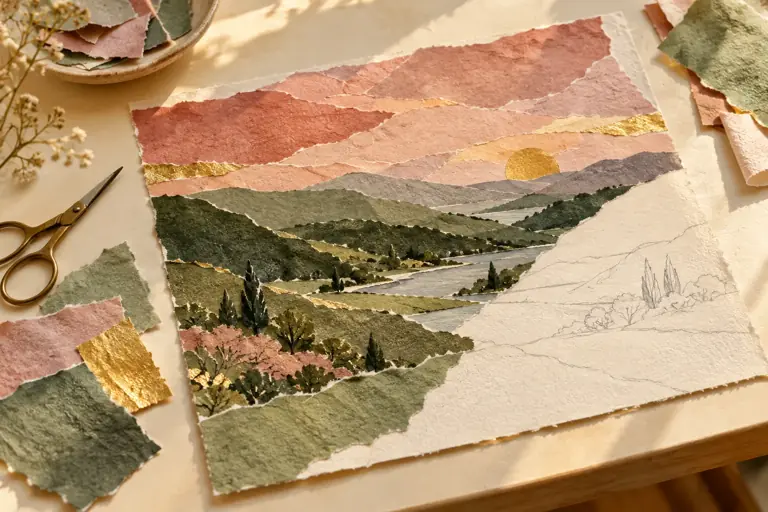
Creative self-doubt can leave you questioning whether you are talented enough to begin. You do not have to settle whether you are “a creative person” before making something. A more useful first step is to choose a small project, allow an unfinished version and evaluate the work rather than your entire identity. Talent is a broad judgment; a draft gives you something specific to develop.
This approach does not promise professional success or say that skill is irrelevant. It simply removes a question that can become impossible to answer before you have begun.
Notice the entry requirement you have invented
What must be true before you allow yourself to create? Perhaps you believe the idea must be original, the result must be useful or the first attempt must look as though it belongs in a portfolio.
Those standards may be appropriate at a later stage. A client project, public performance or commercial product has responsibilities. But applying final-output standards to an exploratory first attempt can make the beginning unnecessarily narrow.
Write your rule as a sentence: “I am allowed to make this only if…” Then ask whether the condition belongs to starting, improving or sharing the work.
For example, “The instructions must be accurate before I publish them” is responsible. “I must already know the perfect explanation before I write a private draft” may prevent the process that would help you discover the explanation.
Separate making from evaluating
Try giving a project two different appointments. In the first, produce a rough version. In the second, decide what needs attention. This is a practical suggestion, not a rule about how every creative person works.
If you are writing, the first appointment might be a short scene or paragraph. If you are arranging a room, it might be a sketch of two layouts. If you are learning photography, it might be a small set of images around one theme.
The rough version does not have to be deliberately bad. It simply does not have to resolve every question at once.
During the later review, ask: What is clear? What interests me? What is missing? What is one change I can actually make? These questions keep evaluation attached to the work rather than turning it into “Do I have the right personality?”
Choose a constraint that gives the project an edge
A completely open invitation to “be creative” may leave you unsure where to begin. You can choose a simple boundary: one page, three colours, one familiar object, a short recording or a story set in a single room.
The constraint is not meant to make the result exceptional. It makes the task identifiable. You can finish a small attempt and learn what you would like to try next.
Imagine a fictional reader who wants to draw but believes they need a distinctive style first. Their project could be drawing the same mug from three angles. They do not need to name a style, buy professional equipment or share the result. They need only an appropriate surface, a drawing tool and a manageable period of attention.
Afterward, they can notice what the exercise revealed: a question about proportion, an interesting line or a desire for instruction. That is more actionable than deciding whether they possess a permanent creative identity.
Ask for feedback on the work you actually want to improve
“Is this good?” invites a very broad judgment. A more useful question might be, “Where did the explanation become difficult to follow?” or “Which part of the image holds your attention?”
Choose someone who understands the stage of the work. Tell them whether you want a first impression, help with a technical problem or a closer review. You do not have to accept every suggestion, but you should be willing to understand what it is responding to.
Feedback can also reveal a mismatch. A person seeking a polished commercial result may not be the best first reader for an exploratory piece. That does not make them wrong or your work beyond criticism; it means the purpose of the exchange needs clarity.
Keep one record of the feedback you decide to use and why. This makes revision a choice rather than a referendum on whether you are talented.
Let the project matter without making it prove everything
A small creative practice does not have to become a business, an identity announcement or a public challenge. You may make something because you enjoy the process, want to communicate an idea or are curious about a material.
You may also have professional ambitions. In that case, separate the practice from the additional work of understanding an audience, developing skills and meeting relevant standards. A reflective exercise does not substitute for those requirements.
If a project does not interest you after trying it, you can stop or change direction. Not every abandoned experiment is evidence of self-sabotage. Sometimes it has answered the question it was meant to answer.
For another perspective on creative assumptions, AACSB's interview on myths of creativity discusses the limits of treating creativity as the exclusive responsibility of a specially designated individual. That is an interview perspective, not a guarantee about any person's output.
Frequently asked questions
What if my first attempt is disappointing?
Describe what disappoints you specifically. Is it a technical skill, an unclear idea or a mismatch between the result and your intention? A specific observation gives you a possible revision; a global label does not.
Do I have to share my work?
No. Private exploration is legitimate. If sharing serves your goal, choose an appropriate audience and stage rather than treating public exposure as proof of commitment.
Can practice guarantee talent or success?
No such guarantee is offered here. The purpose is to give yourself a concrete way to explore and improve a piece of work instead of waiting for a final verdict about who you are.
You can begin with something small enough to finish and interesting enough to revisit. If the identity question keeps overshadowing the activity, Monthly Private Guidance offers information about ongoing reflection with Daria—not a promise of creative or commercial results.